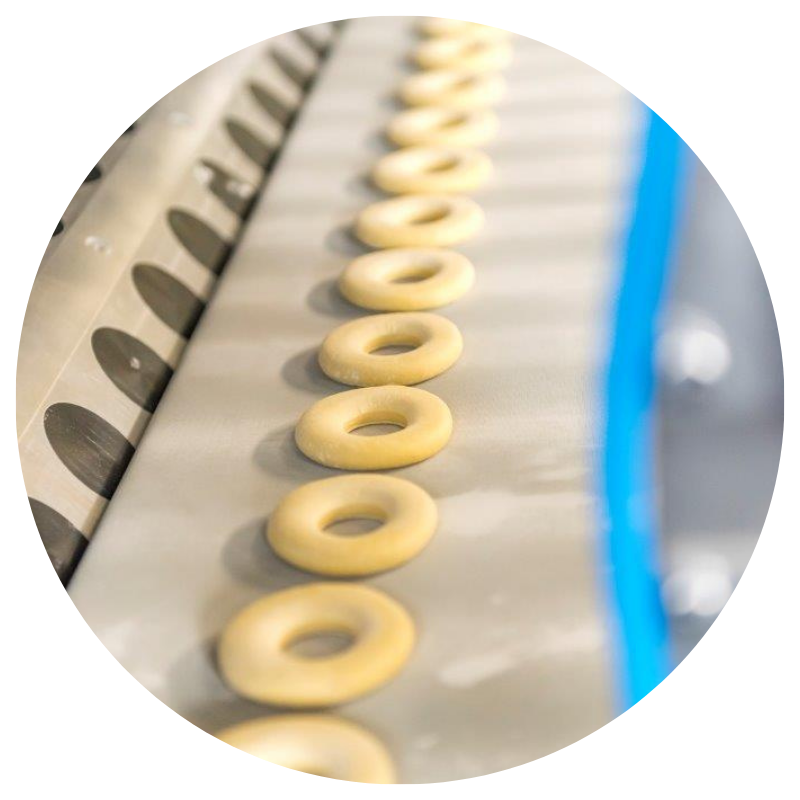
Pretzel

The key characteristic of pretzels is the alkaline treatment they undergo before baking, which gives them their brown color, shiny crust, and unique flavor.

Pretzels fall into two main categories:

1. Soft pretzel:

A fresh product, which is mainly supplied pre-cooked and frozen and baked at the point of sale.

The shelf life after baking is short, these type of Pretzel is typically consumed within hours after purchasing

It`s eaten for breakfast, as a side dish or snack for lunch and taken-away snack

2. Hard pretzel:

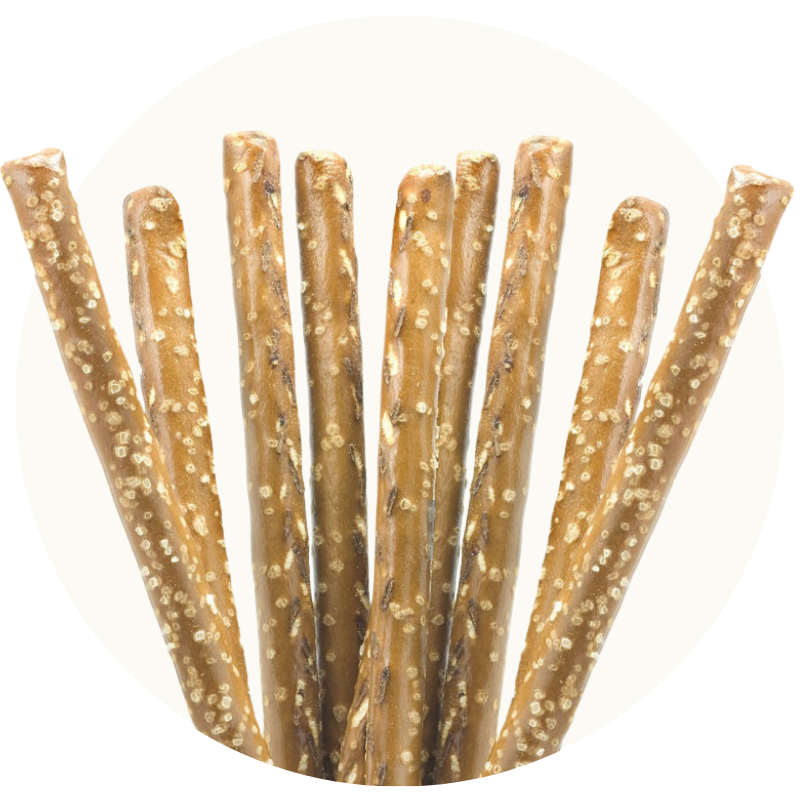
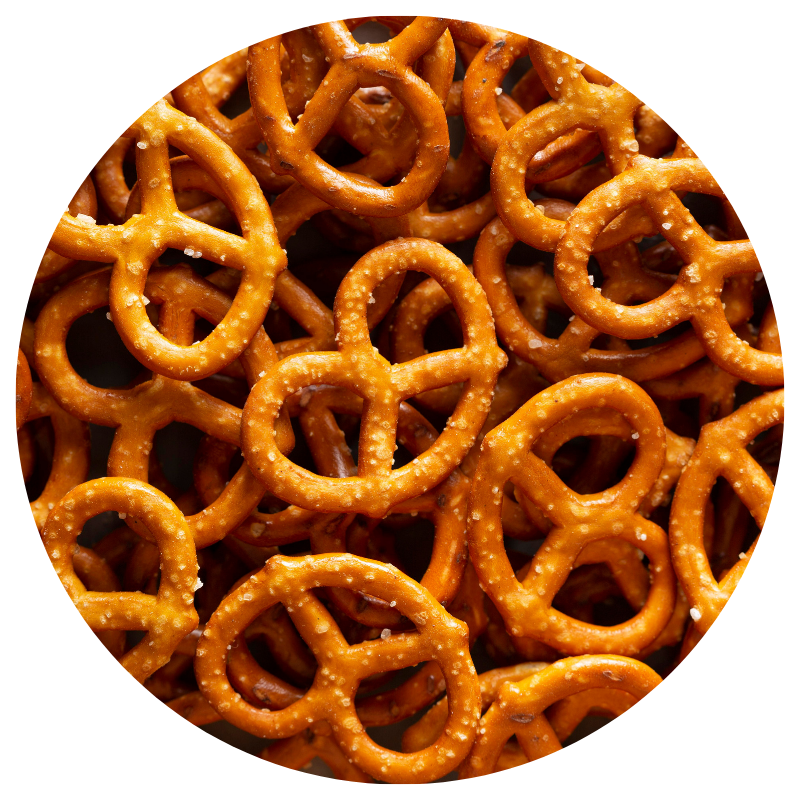
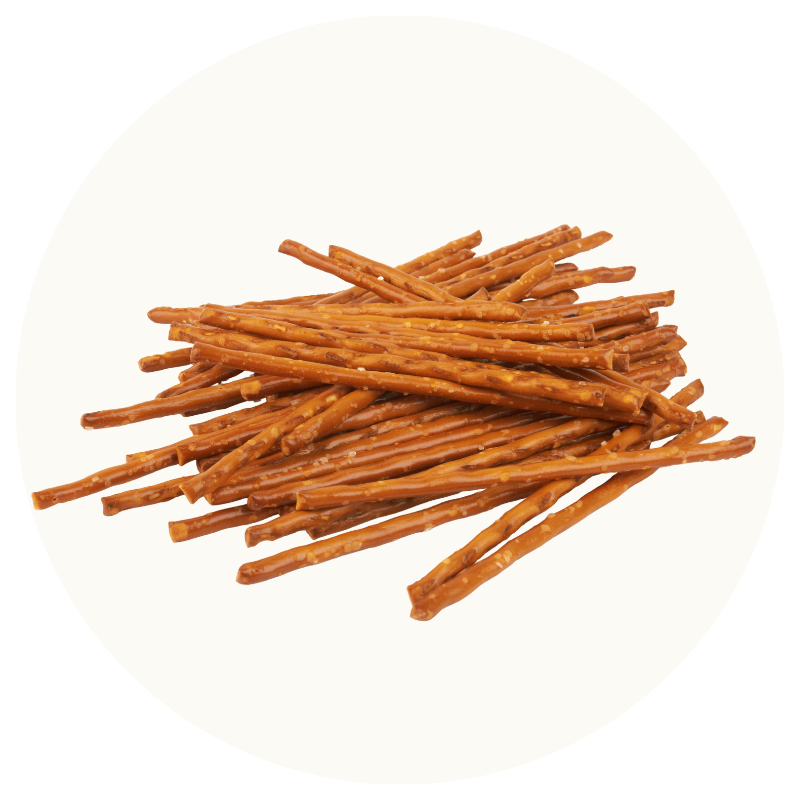
Long shelf life Pretzel, mainly from rotary cutting processing lines with a short, hard bite.

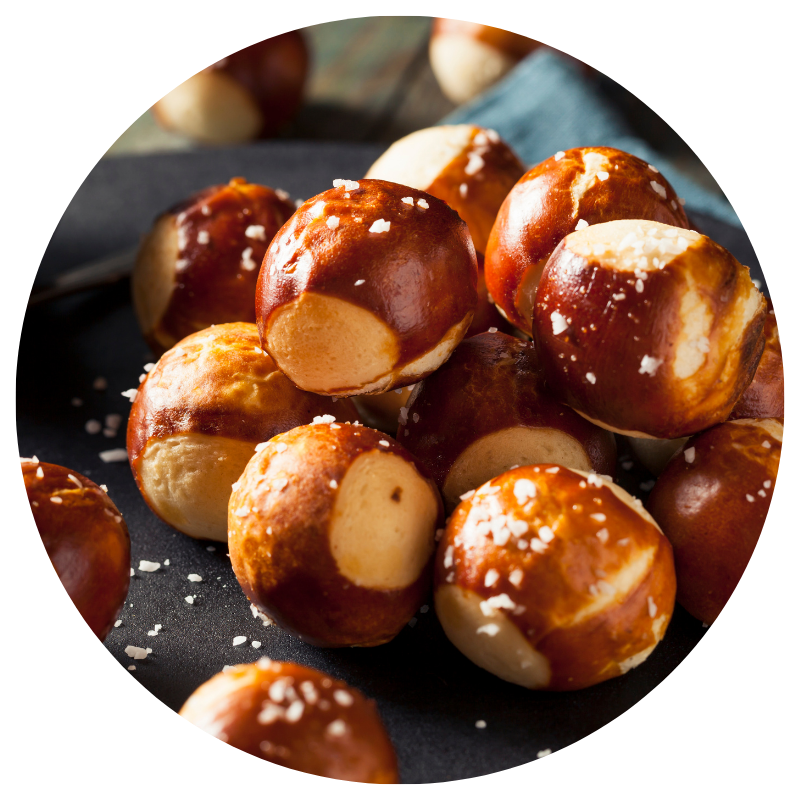
A wide range of varieties are available, such as pretzel snack sticks, pretzel bites, small pretzel or large extruded pretzel.
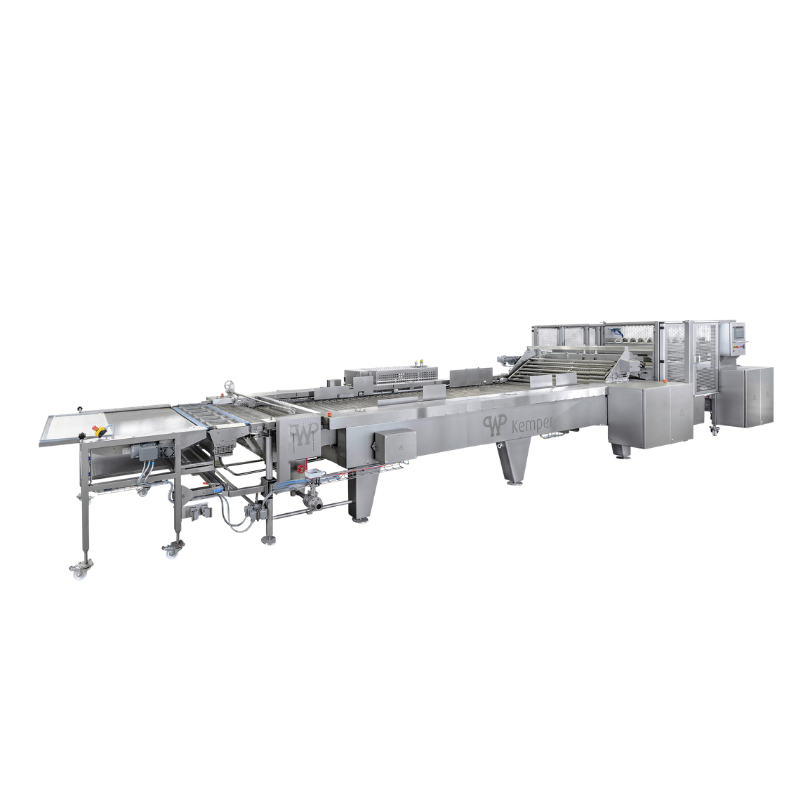
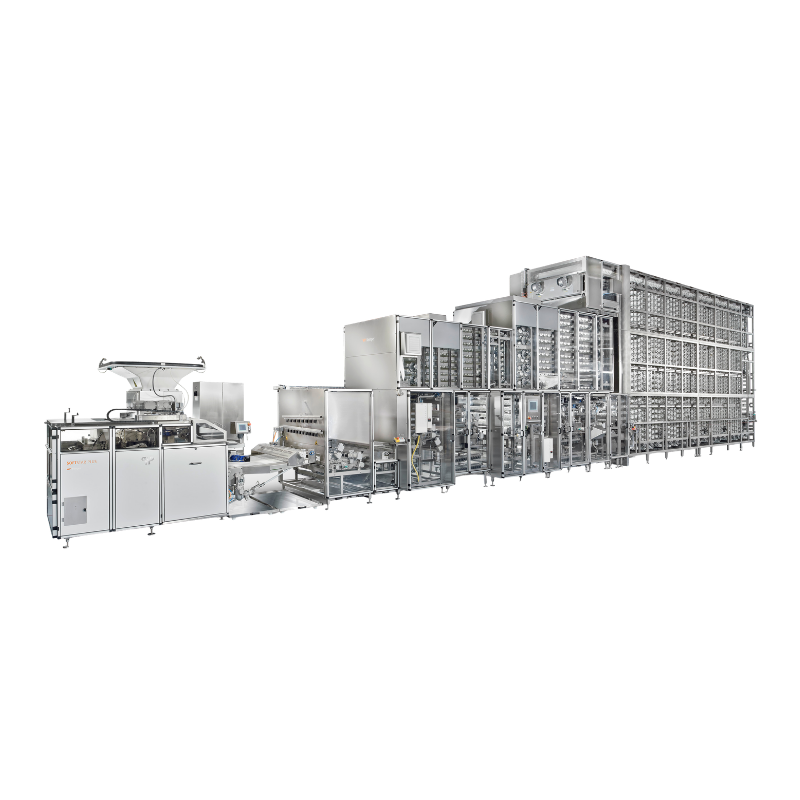
Manufacturing process

  • Recipe Formulation: Typically, soft pretzels contain a higher fat content (sometimes butter) compared to hard pretzels.
  • Soft Pretzels: Sponge and dough processing or a longer final fermentation at cold temperatures is common in some areas.
  • For hard pretzels, it is common to use a straight dough that includes dough scraps.
  • Mixing: Wendel or Spiral mixers are unusual for soft pretzels. Hard pretzels require good dough temperature control, so horizontal mixers with a cooling jacket are often used.
  • Hard pretzels are processed without final fermentation until alkaline application. To get a nice shiny crust, the alkaline bath is heated often.
    In soft pretzels, hardening after fermentation prevents excessive absorption of lye, which would result in very dark cakes with a bitter taste.
  • Baked: both types are baked at higher temperatures for a short time.