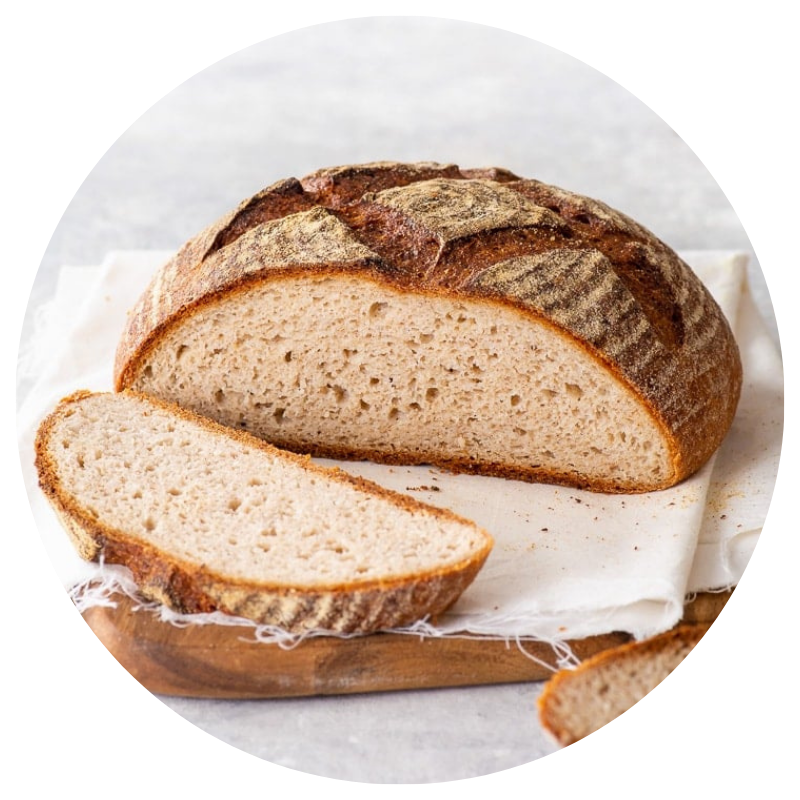
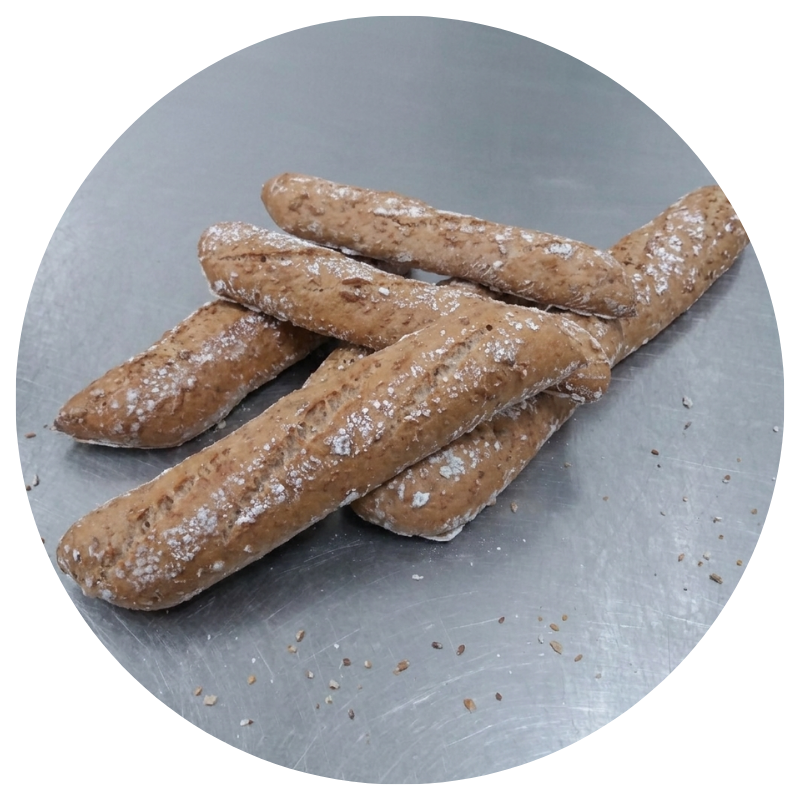
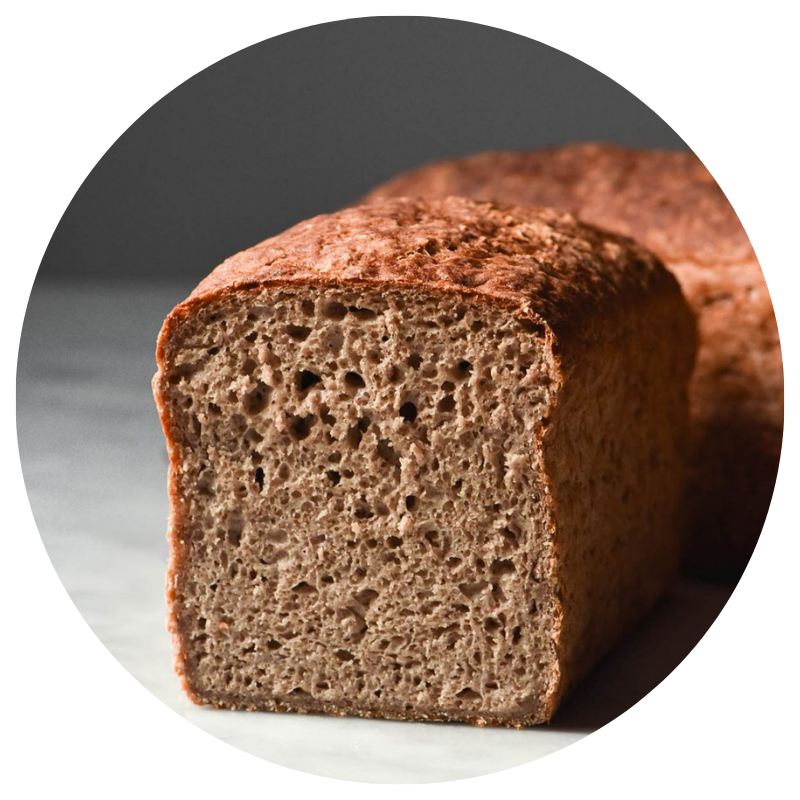
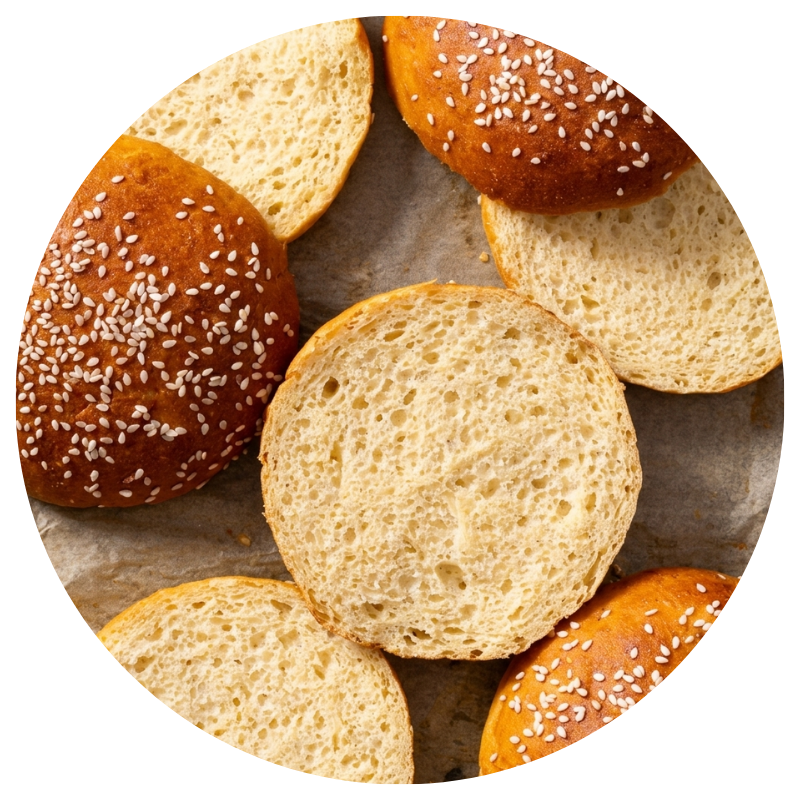
Making gluten-free baked goods is challenging, mainly because gluten plays a crucial role in traditional baking. Its elimination affects the structure, texture, flavor and processing.
These are some of the challenges:
1. Lack of structure and elasticity:
During kneading, gluten forms a strong protein network that traps gas during fermentation and cooking. This gives the bread its elasticity, chewiness and volume.
Gluten-free dough:
– Breaks easily: lack of mechanical resistance.
– Does not stretch well: special processing methods and machines are required.
– To avoid a dense or crumbly product, it is helpful to use sourdough or the sponge and dough method.
– As a gluten substitute, hydrocolloids such as xanthan gum or guar gum are often used.
2. Poor dough handling properties:
Gluten-free dough behaves very differently:
– It is often sticky or dough-like, rather than elastic.
– It is difficult to mold: quite often extruders or laminating lines are used for processing.
– Low tolerance to processing: lack of stability in fermentation (in yeast-risen doughs), low growth in the oven, little tolerance to coloration.
This complicates machining, molding, fermentation and baking.
3. Texture and mouthfeel.
Gluten-free products tend to be:
– Dry: starch, rice flour, sourdough and enzymes are useful to prevent products from being dry and hard.
– Sandy: sponge, guar gum and enzymes improve quality.
– Crumbly: dough temperature, yeast level and dough processing are important aspects to improve crumb structure.
– To improve flavor and nutritional value, seeds and flakes are often added.
Getting a soft crumb similar to that of wheat bread is quite a challenge.
4. Shorter lifespan
Gluten-free baked goods typically:
– Get hard faster.
– Lose moisture quickly.
– Harden in less time.
Recipe formulation, processing parameters and proper packaging will extend shelf life.
In addition to processing, the risk of cross-contamination and higher production costs are aspects that must be taken into account before entering that market.
It is necessary to apply a strict hygiene concept with frequent gluten testing.
It is mandatory to have separate facilities, production lines and warehouses.